


House signs

A house sign tells people they have found the right place, and it says something about the house before anyone reaches the door. At Peninsula House Numbers, a house sign is a house name, a name with a number, or a number with the street name, water-jet cut from 8mm solid aluminium and made in Victoria. We make them for beach houses and holiday homes, farms and rural properties, heritage homes and modern builds, and every one is covered by our 25-year guarantee.

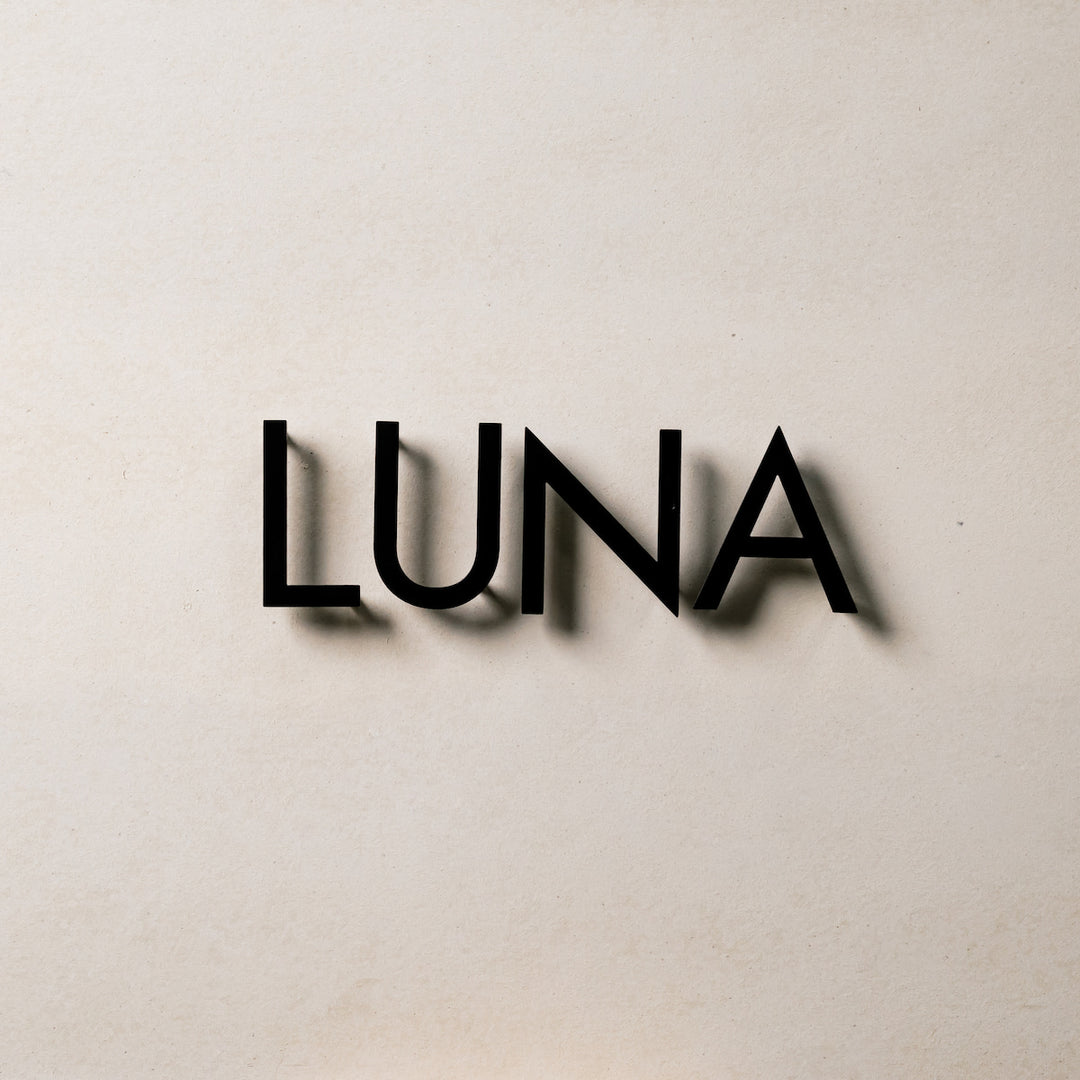
There is no single house sign product on this site. Custom house signs are made one of three ways: as individual letters, as a handwritten script name cut in one piece, or as a plaque with the characters cut right through it. Each suits a different kind of name and a different kind of wall. The three options are set out below, with a letterbox plate to finish the set.
Three ways to make a house sign

All three use the same 8mm aluminium, the same powder coat and the same stainless fixings, so the choice comes down to how the name should look and how long it is. A personalised house sign can be a single word in script or a full address in separate letters.

Individual letters and numbers

Each letter and numeral is cut as a separate piece, which suits longer names, a name with a number, or a full address. Five heights from 100mm to 400mm, from $55 per character, with spaces free.

Design your letters

A name in handwritten script

Your house name is cut as one joined piece, with the letters flowing the way they would if written by hand. Two script fonts, Point Leo and Blairgowrie, in four heights from 150mm to 400mm, from $35 per character.

Design a script name

Cut-through aluminium plaque

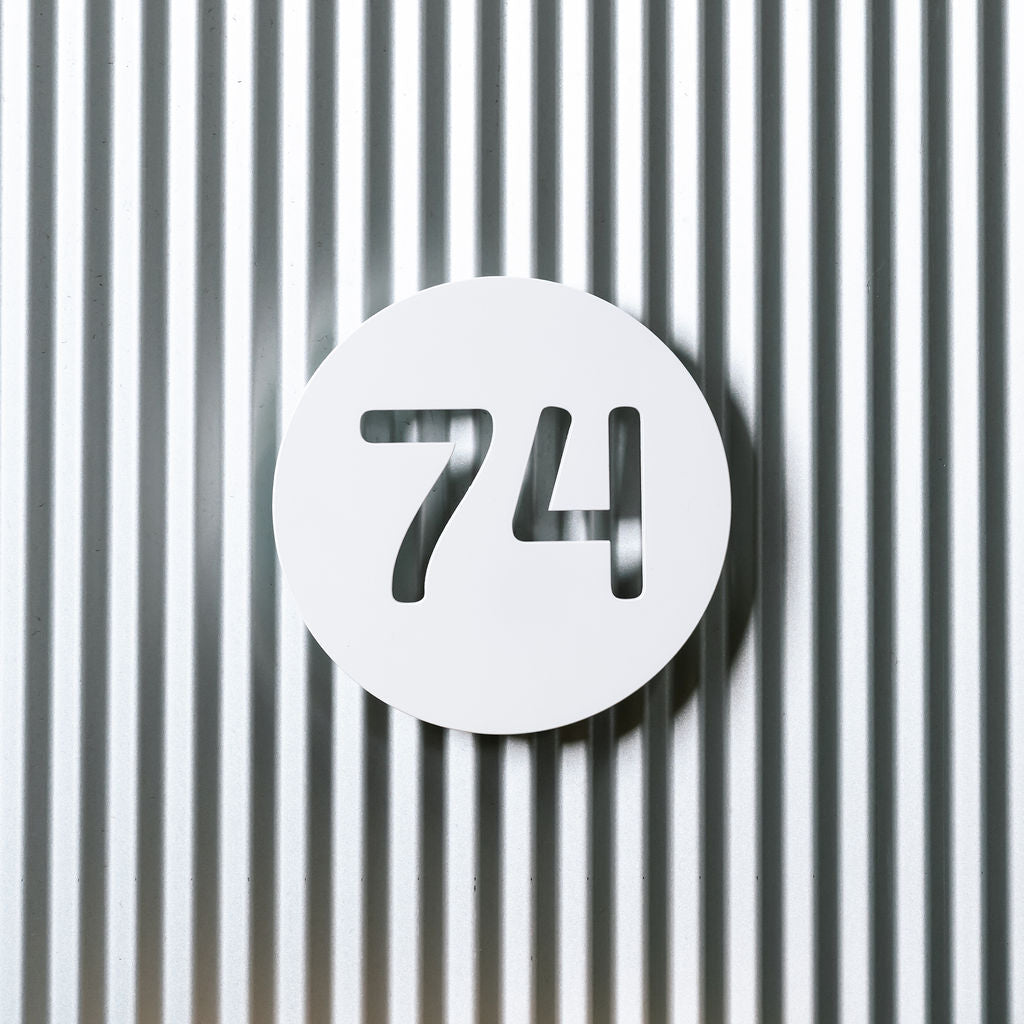
One solid 8mm aluminium plaque with your characters cut right through it, in a circle, rectangle or square. Seven shapes and sizes from a 150mm circle to a 400 x 150mm rectangle, from $135.

See house number plaques

Letterbox plate to match

A letterbox front plate for a brick or rendered pier, in powder-coated aluminium with the mail slot opening cut in. Two sizes, 350 x 200mm or 400 x 165mm, in five finishes shared with our house signs.

See letterbox plates

Choosing is mostly about the name. A short name, a number, or a number with a short street name suits the plaque. A name in one of the five block fonts, anything longer than a plaque holds, or a name and number on two lines suits individual letters. A name you want to read like a signature suits script. For the letterbox pier, a letterbox plate in the same finish as the house sign, with letterbox numbers in 50mm or 75mm on the pier beside it, finishes the set.

Sizing a house name

Width is what catches people out with house name signs. A house number is short, but a name can easily run to seven or eight letters, and every letter adds width. A seven-letter name at 200mm in a wide font can be well over a metre across. Going up a height makes a name wider as well as taller, so measure the space you have before you choose.

Two rules change the measurements. In the block fonts, the height you pick is the height of the numerals and capital letters. Lowercase letters are smaller within the font, so a name in mixed case such as "Banksia" measures less than the stated height. In the script fonts, the height refers to a capital letter and the tails and loops sit outside it, so a script house name sign needs more room above and below than its height suggests.

The width calculator works out the total width for your characters, font and height, and the height guide shows each height photographed against a front door. Every product page can also email you a free print-at-home PDF mockup of your exact design. Tape it to the wall, walk out to the street and check it before you order. For names at 300mm or 400mm, our page on large house numbers covers the bigger sizes in more detail.

script house numbers in matt white

Fonts for house names

There are five block fonts and two scripts, and all seven are named after places on the Mornington Peninsula. Individual letters and the plaque use the five block fonts. Point Leo and Blairgowrie are only for script names. The font sets the style of a house sign, so start with the house: its era, its materials and its setting.

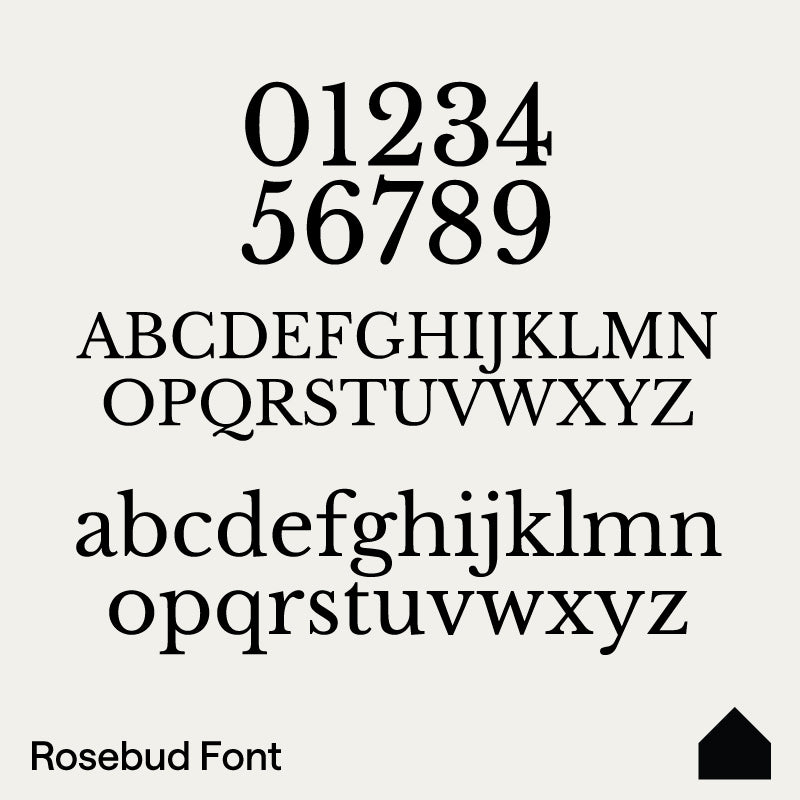
Rosebud

A graceful serif from classic book typography. It suits Federation, Victorian, Georgian and colonial homes, traditional weatherboard and heritage names.

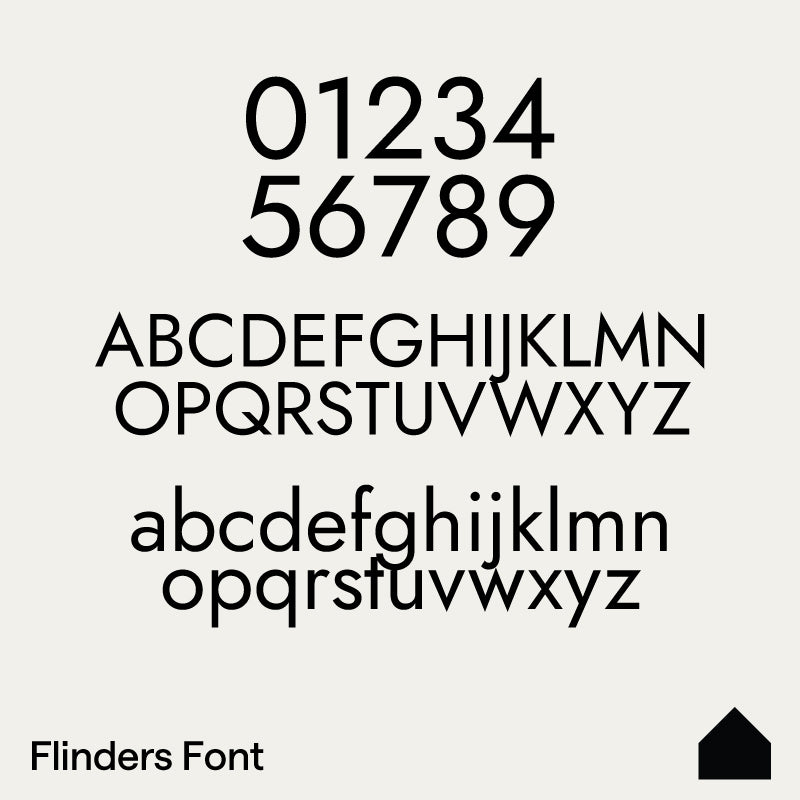
Flinders

A clean, highly legible geometric sans-serif inspired by 1920s Bauhaus, for contemporary, mid-century modern and minimalist homes.

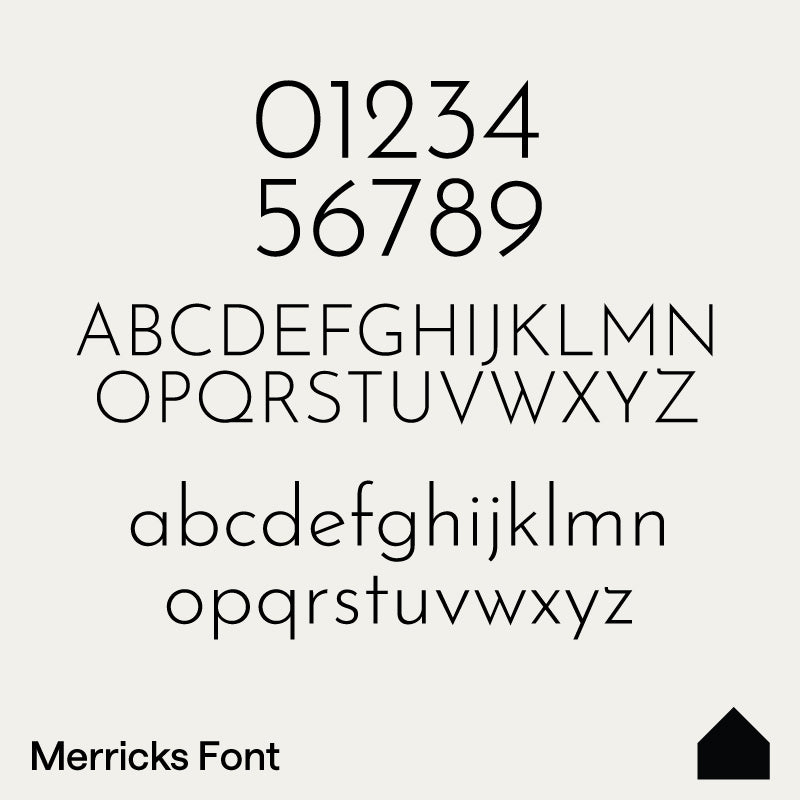
Merricks

A geometric sans-serif with Art Deco influences, for Deco homes, 1920s and 1930s houses and the Californian bungalow.

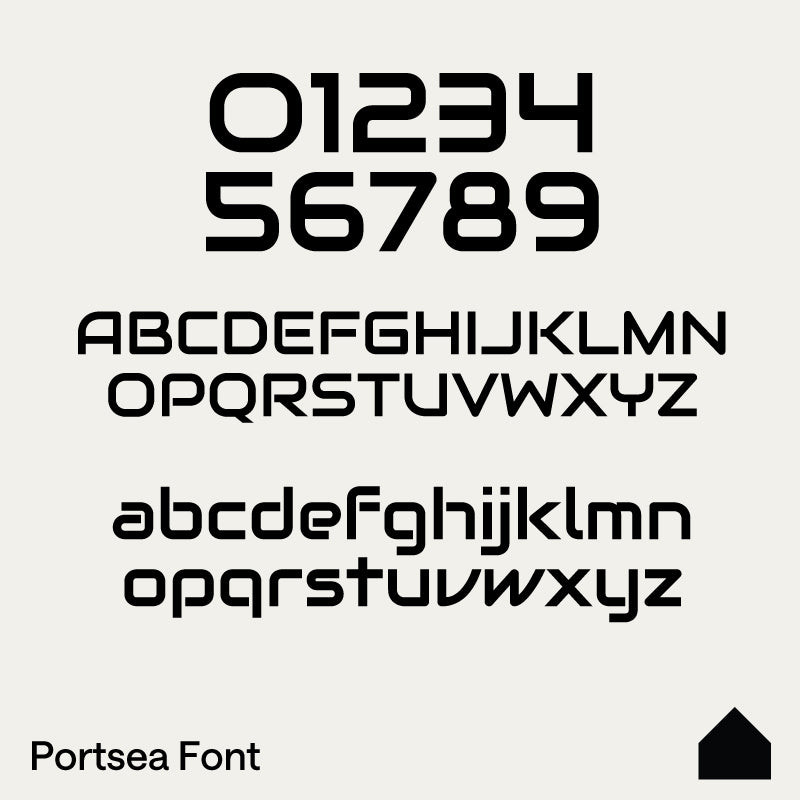
Portsea

Angular and sharp-lined. This is the font for modern house signs on architect-designed and industrial homes in concrete and steel.

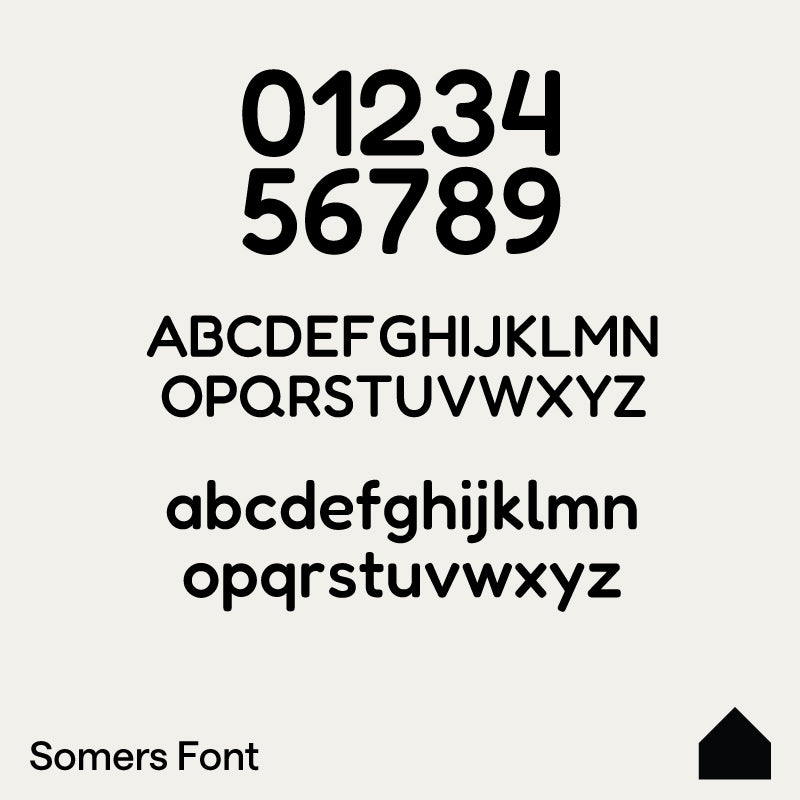
Somers

A playful rounded sans-serif with chunky strokes and a hand-drawn quality, for coastal cottages, family homes and Hamptons-style houses.

Point Leo handwritten script font: numbers, capitals and lowercase

Point Leo

A bold, confident brush script with slanted strokes. It suits beach houses and coastal cottages, and also farmhouses and relaxed family homes.

Blairgowrie handwritten script font: numbers, capitals and lowercase

Blairgowrie

A lighter, looser signature-style script with tall loops and long sweeping tails, for contemporary coastal, Scandinavian-inspired, rendered and whitewashed homes and holiday properties.

For beach house signs, start with Somers, Point Leo and Blairgowrie: Somers for separate rounded letters, Point Leo for a bold joined script, Blairgowrie for a lighter signature. You can compare all seven side by side on our fonts page.

merricks black.jpg

Finishes and contrast

There are 17 powder coat finishes. Matt black, matt white, matt gold and silver are the standard four, with no setup fee. The other 13 are custom colours with a setup fee charged once per order: nine Colorbond colours (Monument, Surfmist, Woodland Grey, Dune, Basalt, Pale Eucalypt, Gully, Ironstone and Shale Grey), Interpon Sable Core Ten, and the Dulux metallics Electro Dark Bronze, Medium Bronze and Aged Brass. The Colorbond colours let you match a roof, fence or garage door.

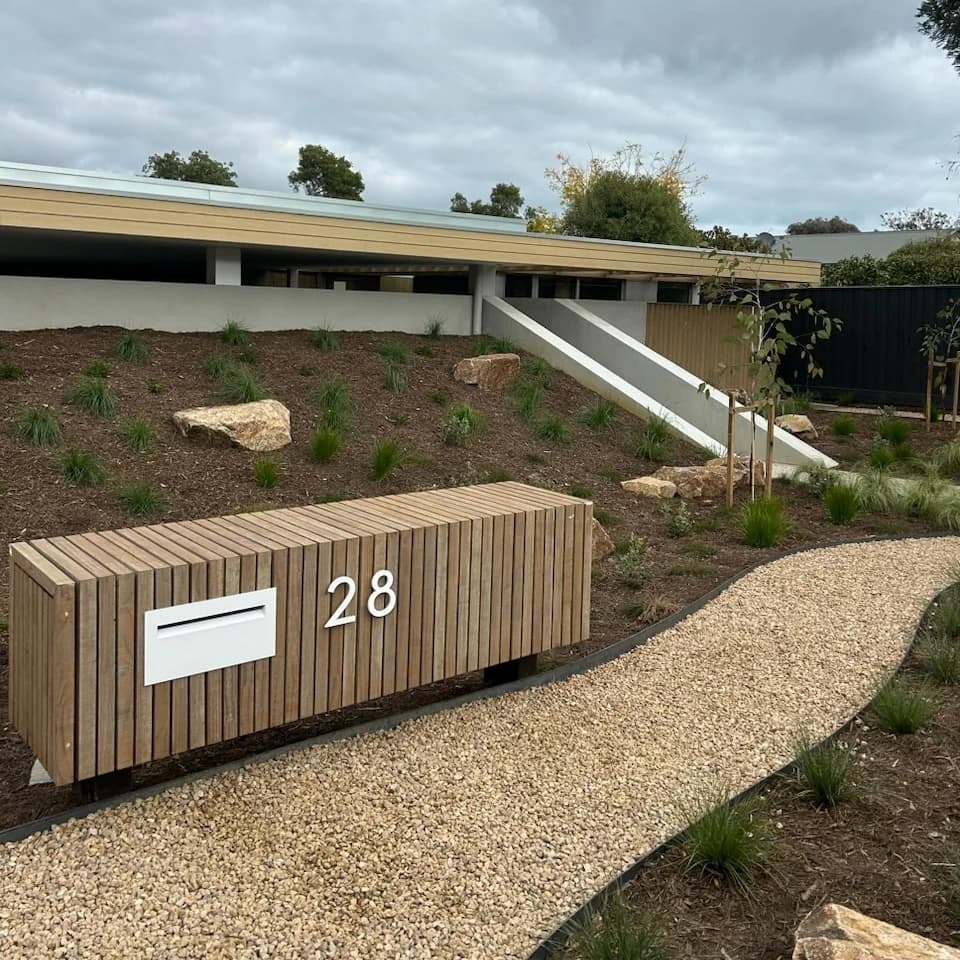
From the street, contrast matters more than colour preference. Matt black reads best on pale render. Matt white stands out on dark timber, charcoal brick and black weatherboard. Gold or bronze adds warmth on a neutral wall. On Colorbond cladding, choose a finish that contrasts with the panel rather than one that matches it. The finish wraps the full 8mm edge, so the sign reads as one solid object rather than a painted face. On a plaque the characters are cut right through, so the wall shows through them. A contrast plate, a 4mm powder-coated plate in a second colour that sits behind the plaque, makes them read clearly.

How house signs are installed

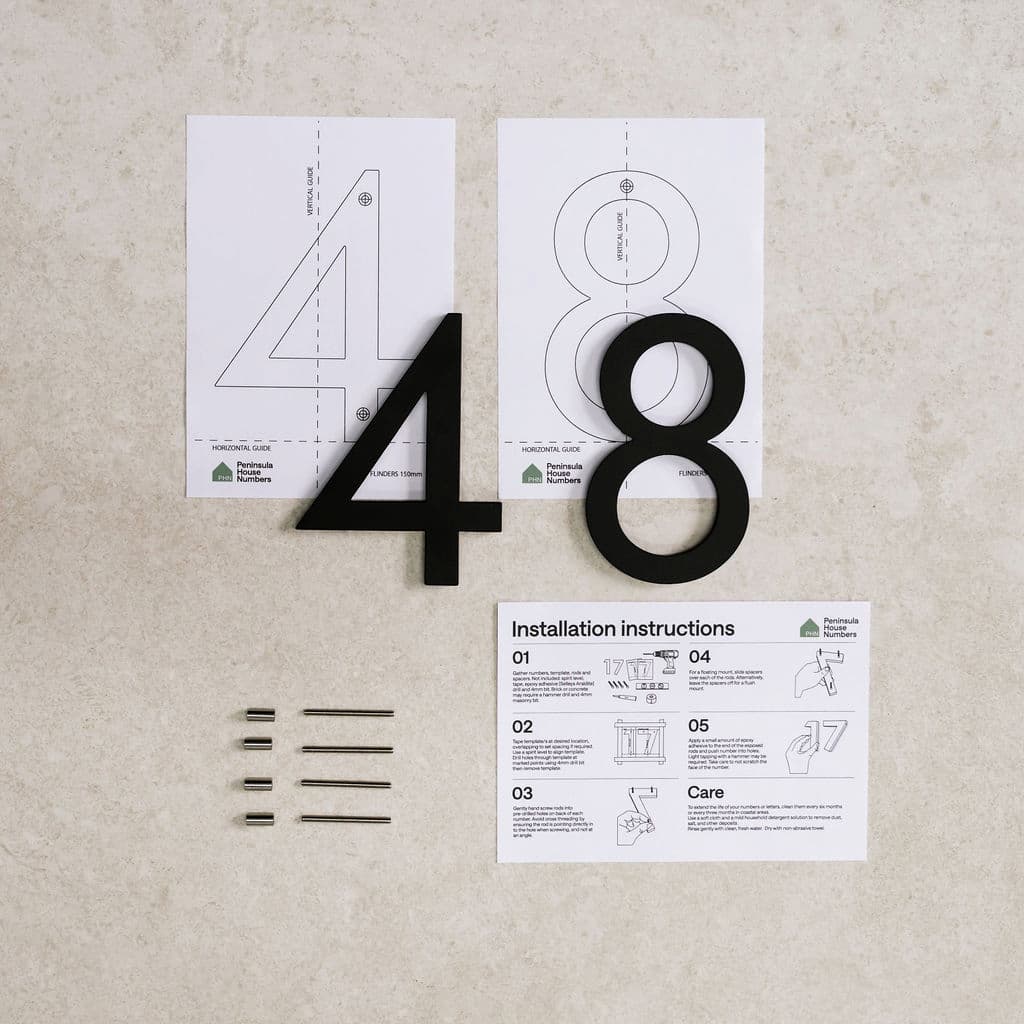
Every house sign comes with 4mm threaded fixing rods and spacers in 304 stainless steel, a paper installation template that shows where to drill, and printed instructions. The rods and spacers allow either a flush mount, where the sign sits on the wall, or a floating mount, where it stands off the wall on the spacers and casts a shadow line. The same hardware does both.

Brick, render, timber, Colorbond and concrete all work. Tape the template up, drill 4mm holes, glue the rods in with epoxy and hang the sign. For a plaque, the same rods go through the plaque's pre-drilled holes. Adhesive and the 4mm drill bit are not included, and brick or concrete may need a hammer drill and a masonry bit. Step-by-step guides are on the installation instructions for letters and installation instructions for plaques pages, and our tips for installing into brick cover the most common wall.

House numbers 4 and 8 with paper installation templates and threaded rods
30 EARLS in matt white serif letters on a grey rendered wall, with cycads and palm trees behind

Address plaques and address signs

An address plaque here means the cut-through plaque with a number and a short street name, on one of the three rectangle shapes: 200 x 75mm, 300 x 100mm or 400 x 150mm. The circle suits a number on its own. Each size has a character maximum, which the builder shows once you choose a size. The more characters on a plaque, the smaller each one gets, which is why long addresses are restricted: the sign would become too delicate.

For a full address, a long street name or two lines of text, individual letters make the better address sign. Each character is cut at the height you choose, so the street name reads as clearly as the number, and the layout can run across one line or stack on two. Individual letters take up to 30 characters per order. Unit and apartment numbering, such as numbered doors in a block, is a different product, so ask us if that is what you need.

House sign questions

It depends on how it is made. Individual letters and script names take 1 to 30 characters per order, and spaces are free. A cut-through plaque has a character maximum for each size, which the builder shows once you choose a size. Long names and full addresses suit individual letters better.

Yes. In individual letters, the name and number go in one order, in the same font, height and finish, on one line or two. On a plaque, a number with a short name fits the rectangle shapes, within each size's character limit. You can also pair a script name with a number in individual letters.

Yes. A number and a short street name fit the rectangle plaques, up to the character maximum the builder shows for each size. For a long street name, a full address or two lines, individual letters are the better choice, because each character is cut separately at the height you choose.

Yes, in Victoria. Every piece is water-jet cut in Dandenong, smoothed and drilled in Mount Eliza and powder coated in Hastings, then posted Australia-wide with Australia Post. If you have been searching for house signs in Australia that are made here rather than imported, this is what Peninsula House Numbers makes, guaranteed for 25 years.

Yes. The letterbox plate is a front plate for a brick or rendered letterbox pier, with the mail slot cut in. It comes in matt black, matt white, matt gold, silver and Colorbond Monument, all of which are also house sign finishes, so pick one for both. Add 50mm or 75mm letterbox numbers on the pier beside it.

On this site, a house sign is any name or address for the front of a house. A plaque is one way to make it: a single 8mm aluminium shape with the characters cut right through. Individual letters and script names are the other two ways, and both handle longer names better than a plaque.

Somers, Point Leo or Blairgowrie. Somers is a rounded sans-serif with chunky strokes, cut as separate letters. Point Leo is a bold brush script and Blairgowrie a lighter signature-style script with long sweeping tails, both cut as one joined piece. All three come in 8mm aluminium, which does not rust, so they suit a coastal site.

Why solid aluminium beats imported house signs

Thin pressed metal, printed acrylic, resin and painted timber all cost less up front. Outside, they flex, fade, delaminate or rot, and a north-facing wall or a site near the coast speeds that up.

Our aluminium house signs are cut from 8mm thick solid 5083-grade aluminium by water-jet, which leaves clean, square edges with no melt. Each piece is acid etched and then finished in Dulux Architectural powder coat, applied to the whole piece rather than printed on the face. Aluminium does not rust, so it suits coastal areas, and an 8mm piece holds its edge. Every sign is made in Victoria and guaranteed for 25 years, and you can read what customers say on our reviews page.

Order your house sign

Start with the product that fits your name: Custom Numbers and Letters for a name or address in separate letters, Script Handwritten Font for a joined script name, or the cut-through plaque for a number or a number with a short street name. Each product page lets you build the design and email yourself a free print-at-home PDF mockup to tape to the wall before you order. If your sign does not fit any of the three, contact us.